
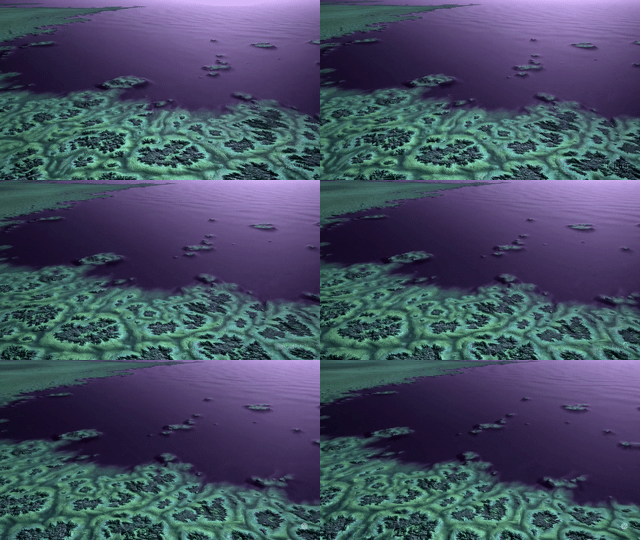
During this time, Earth's oceans may have taken on a purple hue due to the widespread presence of sulfur-rich conditions and the dominance of unusual photosynthetic bacteria.
# Metadata
Title: Oceans Turn Purple Movietime: 6:53 Geographical Time: 1600 Ma
Following the long-lasting anoxic conditions of the Boring Billion, Earth's oceans remained largely depleted of oxygen but became rich in sulfur compounds. These conditions created an ideal environment for sulfur-based photosynthetic life — particularly purple and green sulfur bacteria.
Unlike plants and cyanobacteria that use water in photosynthesis and produce oxygen, these organisms use hydrogen sulfide and release sulfur. Their pigments, tuned to absorb different wavelengths of light, would have tinted shallow waters shades of purple and green.
This period highlights how drastically different Earth’s biosphere once looked and provides a glimpse into alternative life processes that dominated before the rise of complex aerobic organisms.
# Media
YOUTUBE ps2GlGs8oso How Cyanobacteria Took Over The World
YOUTUBE CfNsGppB1Yw The Bacteria That Made Life Possible Are Now Killing Us
# Assets
oceans-turn-purple
