
Gerrymandering is the practice of manipulating the boundaries of Electoral Districts to favor one Political Party, group, or incumbent. It often results in oddly shaped districts that dilute or concentrate voting power in strategic ways.
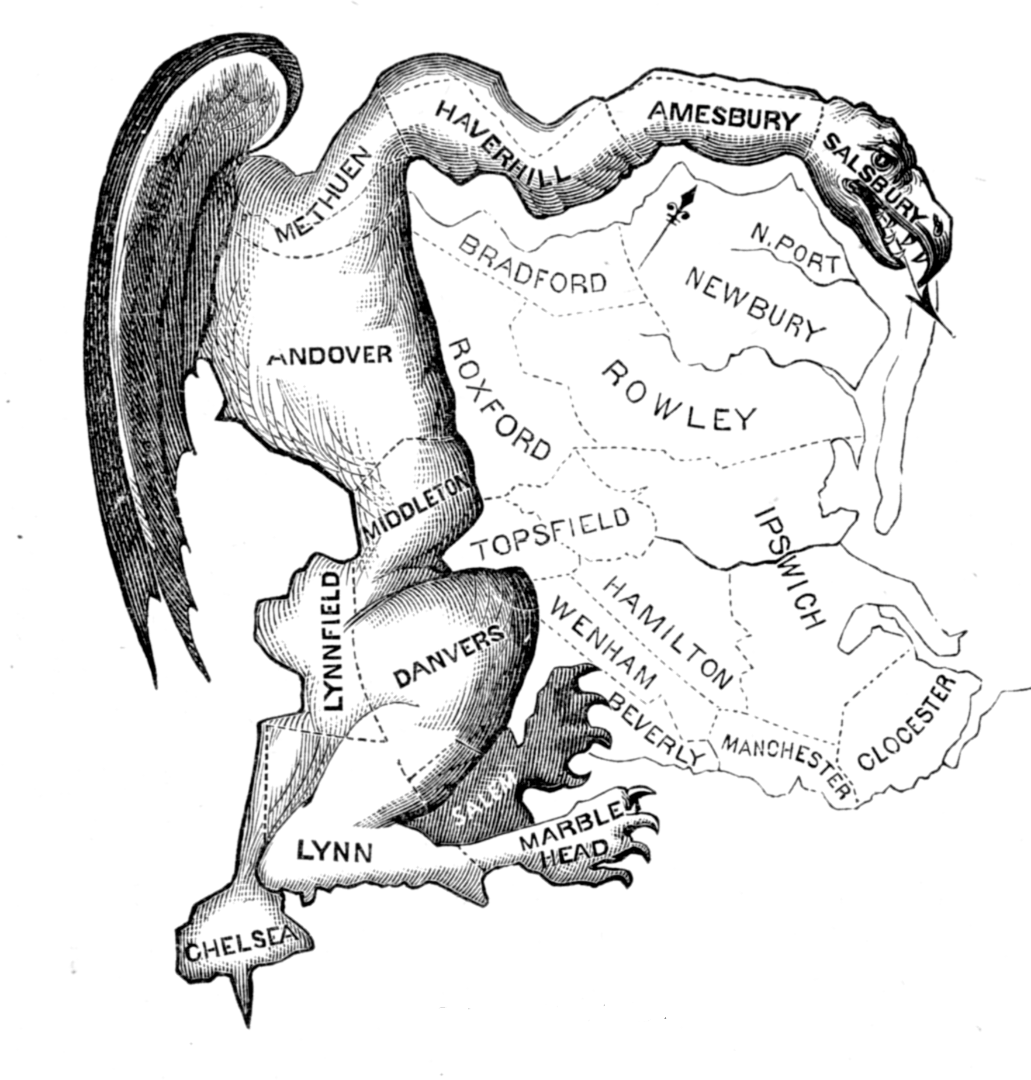
Original cartoon of "The Gerry-Mander", this is the political cartoon that led to the coining of the term Gerrymander. The district depicted in the cartoon was created by Massachusetts legislature to favor the incumbent Democratic-Republican party candidates of Governor Elbridge Gerry over the Federalists in 1812 - wikimedia 
The term originated in 1812, when Massachusetts Governor Elbridge Gerry signed a bill that created a district shaped like a salamander. Critics combined Gerry and salamander into Gerrymander, and the name stuck.
Common methods include Packing (concentrating opposing voters into a few districts to reduce their influence elsewhere) and Cracking (spreading them across many districts to dilute their vote).
Gerrymandering undermines the principle of Fair Representation. It can entrench political power, discourage Voter Turnout, and skew legislative priorities away from the interests of the general population.
# Supreme Court Usage The Supreme Court of the United States has described this idea as a core democratic principle.
In Rucho v. Common Cause (2019), citing Arizona State Legislature v. Arizona Independent Redistricting Commission (2015), the Court wrote:
> That the voters should choose their representatives, not the other way around.
>
> supremecourt.gov 
# See
- Gerrymandering on - wikipedia
- law.cornell.edu
- brennancenter.org